
Back to Square One: Trump's 'Art of Deal' in Iran - Nuts, Bolts and the Wrenches
After months of being at loggerheads in the war with Iran while working frantically on the diplomatic front, seeking an exit off-ramp desperately; Trump has been able to somehow reach the critical breakthrough which provides him an opening to somehow be able to shut the door on the very war he himself started. However, the outcome of the deal, achieved after months of fighting; which has lead to destruction of U.S. military bases besides erosion of American influence in the Gulf region with the myth of American military might duly dusted & weaknesses exposed, ascension of Iran almost as a regional hegemon still in possession of the highly enriched Uranium (HEU) under a further hardened & hardliner regime and American public opinion being critical of and largely against Trump owing to the acute economic pain caused to millions of ordinary Americans and billions across the globe; is not very different geopolitically from how it was before the start of the war.
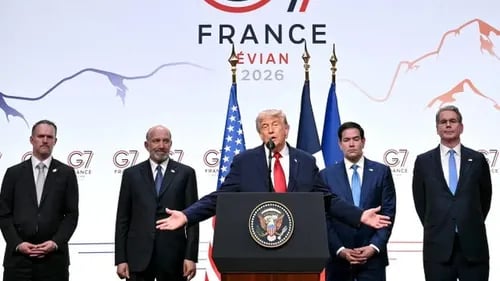
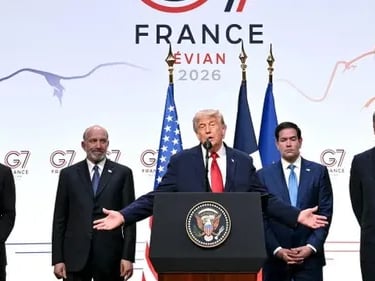
“The Obuma Deal was a road to a Nuclear weapon for Iran, cash and all, one of the worst and dumbest (hence Dumocrats!) Deals ever made by the U.S. Our Deal is a WALL against Iran ever having a Nuclear weapon, the complete opposite of Obuma”, Donald Trump on June 14, 2026 about the Iran Deal.
After months of being at loggerheads in the war with Iran while working frantically on the diplomatic front, seeking an exit off-ramp desperately; Trump has been able to somehow reach the critical breakthrough which provides him an opening to somehow be able to shut the door on the very war he himself started.
However, the outcome of the deal, achieved after months of fighting; which has lead to destruction of U.S. military bases besides erosion of American influence in the Gulf region with the myth of American military might duly dusted & weaknesses exposed, ascension of Iran almost as a regional hegemon still in possession of the highly enriched Uranium (HEU) under a further hardened & hardliner regime and American public opinion being critical of and largely against Trump owing to the acute economic pain caused to millions of ordinary Americans and billions across the globe; is not very different geopolitically from how it was before the start of the war.
The Art of Deal
The U.S.-Iran agreement to end the war—formally established as the 14-point Islamabad Memorandum of Understanding (MOU)—is being touted as an interim peace framework aimed at halting the nearly four-month conflict that began in February 2026.
The deal was signed on June 17, 2026, by US President Donald Trump and Iranian President Masoud Pezeshkian. It institutes an immediate 60-day ceasefire window designed to defuse global economic strain and provide a timeline to negotiate a permanent treaty.
The critical details of the 14-point framework include:
1. Cessation of Hostilities & Regional Impact
End to Fighting on All Fronts: The deal mandates the immediate and permanent termination of military operations between the US, Iran, and their respective allies.
The Lebanon Clause: The agreement explicitly includes Lebanon, effectively requiring Iran to rein in Hezbollah. While Iran has claimed this obligates Israel to withdraw from southern Lebanon, Israeli Prime Minister Benjamin Netanyahu has maintained that Israel is not a direct party to the MOU and retains the full right to strike back if attacked.
2. Maritime Blockades & Energy Markets
Reopening the Strait of Hormuz: Iran has committed to using its "best efforts" to instantly reopen the critical Strait of Hormuz for toll-free, safe passage of commercial vessels for the 60-day period while technical de-mining takes place.
Lifting the US Naval Blockade: In tandem, the United States is immediately beginning the phased removal of its naval blockade on Iranian ports, to be fully completed within 30 days.
3. Nuclear Provisions
Uranium Down-Blending: As an immediate concession, Iran has agreed to down-blend (dilute) its stockpile of highly enriched uranium on Iranian soil under the strict supervision of the UN’s International Atomic Energy Agency (IAEA).
Nuclear Ban Reaffirmation: The text explicitly notes that "Iran reaffirms that it shall not procure or develop nuclear weapons". However, the long-term status of Iran’s civil enrichment program has been deferred to the 60-day negotiation track.
4. Sanctions Relief & Reconstruction Funds
Oil Export Waivers: The US Treasury is immediately issuing waivers allowing Iran to resume selling crude oil, petroleum products, and derivatives to international markets alongside associated banking and transport services.
Frozen Assets & Sanctions: The US has pledged to unfreeze restricted Iranian funds and assets. However, the broader, permanent termination of primary and secondary US and UN sanctions is strictly performance-based and closely tied to the outcome of the final nuclear settlement.
$300 Billion Reconstruction Fund: The US and regional partners have agreed to plan a minimum $300 billion fund for the reconstruction and economic development of Iran. President Trump has emphasized that this will function as a conduit for private and regional investment (primarily from Gulf Arab states) rather than direct American taxpayer funding.
The Way Forward and the Security Council Mandate
The 60-day clock is actively running for diplomats to secure a finalized deal. If a comprehensive agreement is reached, the framework dictates that the final treaty must be formally endorsed by a binding United Nations Security Council (UNSC) resolution, after which the US must pull its military forces back to pre-war regional postures within 30 days. President Trump has publicly warned that the US will resume a heavy bombing campaign if Iran fails to comply with the terms during the interim period.
Global Economic and Diplomatic Reactions
Market Relief: Global energy markets responded immediately. Brent crude prices fell sharply, dropping below $80 a barrel for the first time since the war began in late February, significantly easing concerns over a prolonged global energy crisis.
International Support: Leaders of the G7 nations meeting in France—including the UK, France, Germany, and Italy—have issued a joint statement welcoming the diplomatic breakthrough and offering to lift secondary international sanctions conditionally as verifiable steps are met.
Immediate Impacts
Reopening of the Strait of Hormuz: The primary mandate of the initial pact is the unrestricted reopening of the Strait of Hormuz. The U.S. has agreed to lift its naval blockade on Iranian ports, while Iran must allow unhindered commercial shipping without imposing maritime toll systems.
Drop in Global Oil Prices: Upon announcement, global oil markets reacted with immediate optimism. Brent crude plummeted to around $83 a barrel—hitting a three-month low—as traders dialled-back the geopolitical risk premium.
Global Stock Market Rebound: Easing energy pressures sparked a widespread rally in global equity markets. Major indices like the S&P 500, Dow Jones, and Nasdaq rose significantly, though energy giants (like BP and Shell) saw slight contractions due to lower crude prices.
Pause on all Military Fronts: The deal mandates a 60-day ceasefire, halting direct kinetic strikes between the U.S. and Iran. It also includes a pause in military operations in Lebanon to protect regional stability during negotiations.
Long-Term Implications & Structural Challenges
Lag in Consumer Relief: Though crude oil prices dropped instantly, analysts indicate that domestic petrol and fuel prices will take months to normalize going forward. Port bottlenecks, peak summer travel demand, and the 40-to-50-day window needed for mine-sweeping operations before maritime insurance providers fully clear the strait will delay direct relief.
Sticky Food & Fertilizer Inflation: The war caused severe structural damage to natural gas and chemical infrastructure. Because natural gas is a foundational component of nitrogen-based fertilizers, the crop season in many parts of the world has already been missed. Consequently, global grocery and food prices are expected to remain elevated through the rest of the year, forming a new permanent baseline, as also indicated by the U.S. Fed which kept the interest rates steady to counter inflation in its latest move yesterday.
Fragile 60-Day Nuclear Negotiating Track: The most complex geopolitical topics—specifically the permanent dismantling of Iran's highly enriched uranium stockpiles and the untangling of multi-layered international sanctions—have been deferred to a 60-day negotiating window. Experts remain highly skeptical about a nuclear breakthrough ultimately due to a fundamental lack of trust.
U.S.-Israel Diplomatic Divergence: A significant rift has emerged between Washington and Jerusalem. While President Donald Trump has championed the framework as a massive diplomatic success, Israeli Prime Minister Benjamin Netanyahu remains deeply skeptical. Israel has reserved the right to act independently and maintain freedom of maneuver in Lebanon, leaving the northern border highly volatile. Israeli Prime Minister Benjamin Netanyahu has strongly distanced Israel from the accord. Netanyahu stated that the Israel Defense Forces (IDF) will continue occupying parts of southern Lebanon indefinitely to neutralize Hezbollah. Iranian Foreign Minister Abbas Araghchi warned that Israel’s continued occupation violates the core spirit of the deal and could reignite all-out war.
Proxy Groups Left Unchecked: The MoU focuses strictly on state-level de-escalation. It features no framework to rein in or disarm Iran's regional proxy networks, such as Hezbollah, the Houthis, or Hamas. Iran maintains that backing these groups remains a permanent, non-negotiable core of its defensive security strategy.
Missiles Excluded: To secure the initial ceasefire, Washington quietly stepped back from demands regarding Iran's conventional ballistic missile programs, meaning Tehran still holds roughly 70% of its prewar mobile missile launchers intact.
Diverging Timelines: The Trump administration is reportedly pushing for a 20-year freeze on enrichment, whereas Tehran is pushing back at a maximum of 10 years and maintains that a "zero enrichment" demand violates its fundamental rights under the Nuclear Non-Proliferation Treaty.
Verification Challenges: Observers also worry that Iran's highly decentralized, underground nuclear network will present a massive obstacle for any future international verification and inspection regimes.
However, looking back retrospectively, one is left baffled as to what is really different about Trump’s latest deal after hundreds of billions of dollars worth of regional military, civil & energy infrastructure destroyed in war which will have to be rebuilt from scratch. Also, President Obama’s JCPOA had already achieved the extraction of 97% of Iran’s HEU diplomatically without a war while Iran was also already fully complying with the terms of the deal in terms of adherence to the stipulated enrichment threshold, as per the IAEA.
Trump’s latest ‘opportunistic’ war, initiated on his gut feeling to be able to topple the Iranian regime entirely from power entirely, has rather only further hardened it by bringing even more radical elements within it to the fore with the vanquishing of the existing top leadership. Thus, Trump, after having vehemently criticized Obama & Biden for releasing billions of dollars in frozen assets & funds to Iran earlier as part of their deals; is now walking down the very same path while being also required to pay an additional $300 billion worth of reparations towards infrastructure reconstruction costs which effectively brings the world back to square one with the Iranian nuclear Gordian knot, once again, being tackled diplomatically after the due application of American military.
Republican Senator Bill Cassidy of Louisiana took a serious jibe at Trump and his Art of the Deal with his comment, "Before the war, the strait was open, Iran was being crushed by sanctions, and 13 service members were still alive. Now, 13 Americans are dead, families have paid billions at the pump, sanctions will be lifted, and the bombing has stopped,” Cassidy wrote on X. “This is the worst foreign policy blunder in decades."
Susan Rice, who served as national security adviser to Obama, called the MOU a “jaw-dropping, horrific surrender document complete with hundreds of billions in reparations.” in a comment made to media, as published by the Washington Post.
Lastly, on a concluding note, the outcome of the deal in ensuring peace in the region will be highly contingent on Trump’s ability to be able to control a trigger-happy Netanyahu as well as himself from resorting back to force against Iran or its network of regional proxies either for territorial gains (Israel) or commercial interests led by oil (Trump)...
"You can always count on Americans to do the right thing - after they've tried everything else." - Winston Churchill (He has been proved right, once again, even posthumously, as far as the depth of his know-how about Americans and their affairs is concerned....)
For more, Read the Latest 3-Part Book Series on Trump Presidency on Amazon at the Link below:-
https://www.amazon.com/Barefaced-Narcissist-Donald-Trumps-Democracy/dp/B0H2SGYHDT/